

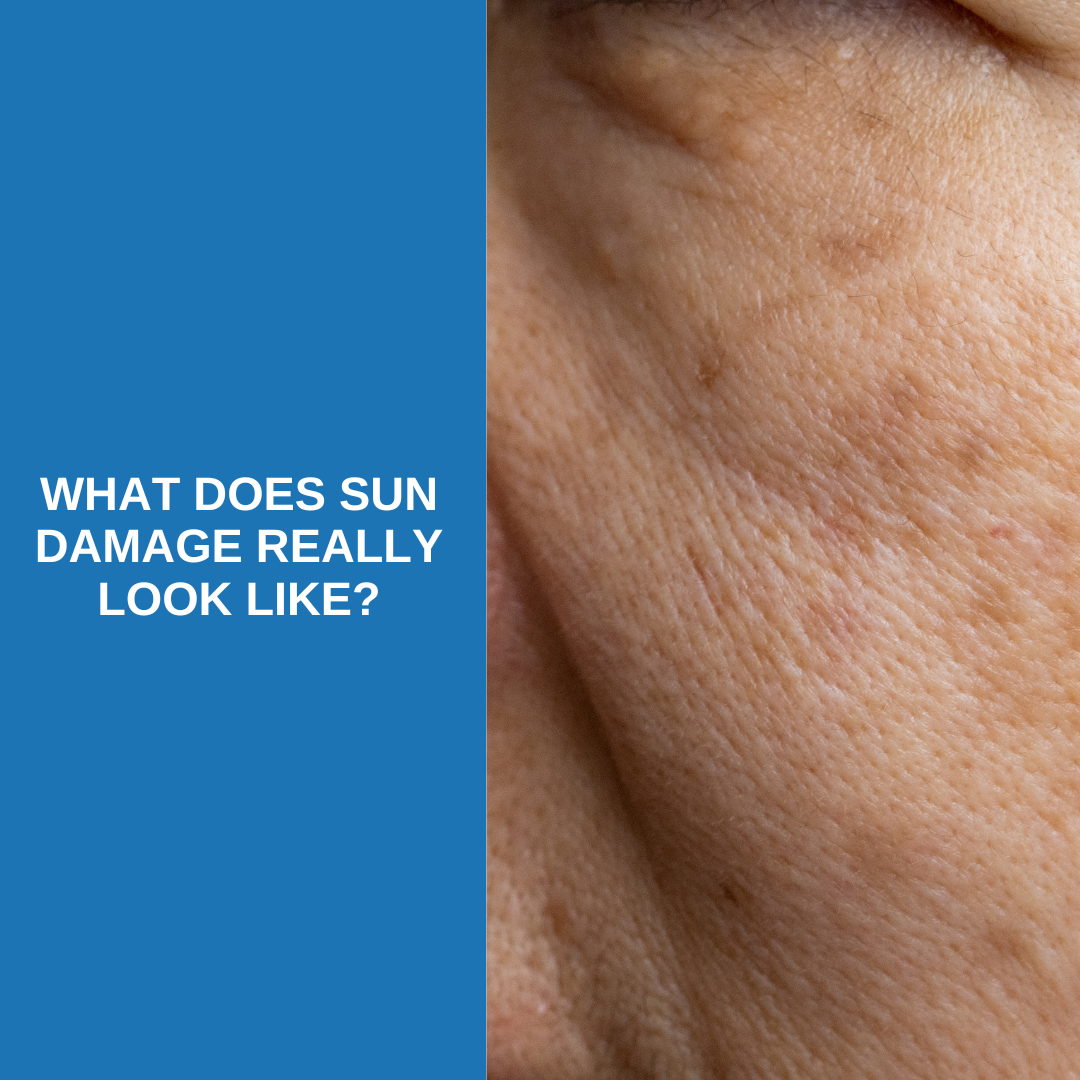
When most people think about sun damage, they picture a painful sunburn after a long day at the beach. But the truth is, sun damage often shows up in ways that are much more subtle, and much more permanent.
In fact, many of the changes people associate with “getting older” are actually the result of years of ultraviolet (UV) exposure. Whether you’ve spent decades working outdoors, enjoying sports, or simply running everyday errands, the sun leaves its mark on your skin over time.
Here are some of the most common signs of sun damage and what you can do about them.
Fine Lines and Wrinkles
While aging naturally contributes to wrinkles, sun exposure is one of the biggest factors behind premature skin aging. UV rays break down collagen and elastin, the proteins that keep skin firm and smooth.
As these support structures weaken, the skin begins to sag, crease, and wrinkle—especially in areas that receive the most sun exposure, such as the face, neck, chest, and hands.
Brown Spots and Uneven Pigmentation
Those “age spots” that seem to appear out of nowhere? They’re actually more closely related to sun exposure than age.
Years of UV exposure can trigger excess pigment production, leading to freckles, sun spots, and larger areas of discoloration. Over time, these spots can become darker and more noticeable, especially on the face, shoulders, chest, and backs of the hands.
Redness and Visible Blood Vessels
Have you noticed tiny red veins around your nose or cheeks?
Chronic sun exposure can damage the skin’s support structures, causing blood vessels to become enlarged and visible. These vessels often appear as fine red lines or web-like patterns and are common on the face, neck, and chest.
Rough, Leathery Skin
Healthy skin should feel smooth and resilient. Sun-damaged skin often feels rough, thickened, dry, or leathery.
Repeated UV exposure changes the texture of the skin over time, making it appear older and less vibrant than protected skin.
Blotchy Skin Tone
Sun damage doesn’t always show up as a single dark spot. Many patients develop a patchy or uneven complexion with areas of redness, brown discoloration, and changes in pigmentation.
This blotchiness can make skin appear dull and aged, even when other signs of aging are minimal.
Melasma
Melasma appears as larger patches of brown or gray-brown discoloration, often on the cheeks, forehead, upper lip, and nose.
While hormones can contribute to melasma, sun exposure is one of the primary triggers. Even small amounts of daily UV exposure can worsen existing pigmentation.
Persistent Redness on the Neck and Chest
A chronically red or mottled appearance on the sides of the neck and upper chest is another common sign of sun damage.
This condition develops after years of UV exposure and is especially common in people who spend significant time outdoors.
The Most Serious Sign: Skin Cancer
While cosmetic concerns often bring patients into the office, the most important reason to monitor sun damage is the increased risk of skin cancer.
Skin cancers can appear as:
- New growths
- Non-healing sores
- Scaly patches
- Pearly bumps
- Spots that bleed, itch, or change over time
Any new, changing, or concerning lesion should be evaluated by a dermatologist.
Can Sun Damage Be Reversed?
While we can’t completely erase years of UV exposure, many signs of sun damage can be improved.
Professional treatments such as chemical peels, laser treatments, and medical-grade skincare can help improve pigmentation, texture, redness, and fine lines. We offer a variety of all of the above in our office and our team can recommend the best approach based on your skin type and concerns.
The Best Treatment Is Prevention
No matter your age, it’s never too late to protect your skin.
Daily habits that make a difference include:
- Wearing a broad-spectrum SPF 30+ sunscreen every day
- Reapplying sunscreen when outdoors
- Wearing hats, sunglasses, and protective clothing
- Seeking shade during peak sun hours
- Scheduling regular skin exams
At Savannah River Dermatology, we’re here to help you protect your skin, address signs of sun damage, and detect skin cancer early. If you’ve noticed changes in your skin or are concerned about sun damage, schedule an appointment with our team today.
The information presented in this blog is for informational purposes only and should not be taken as medical advice. If you have questions or concerns, please call our office or make an appointment with a medical professional. Savannah River Dermatology is located at 575 Furys Ferry Rd in Augusta, Ga. Our office can be reached at 706-691-7079.