

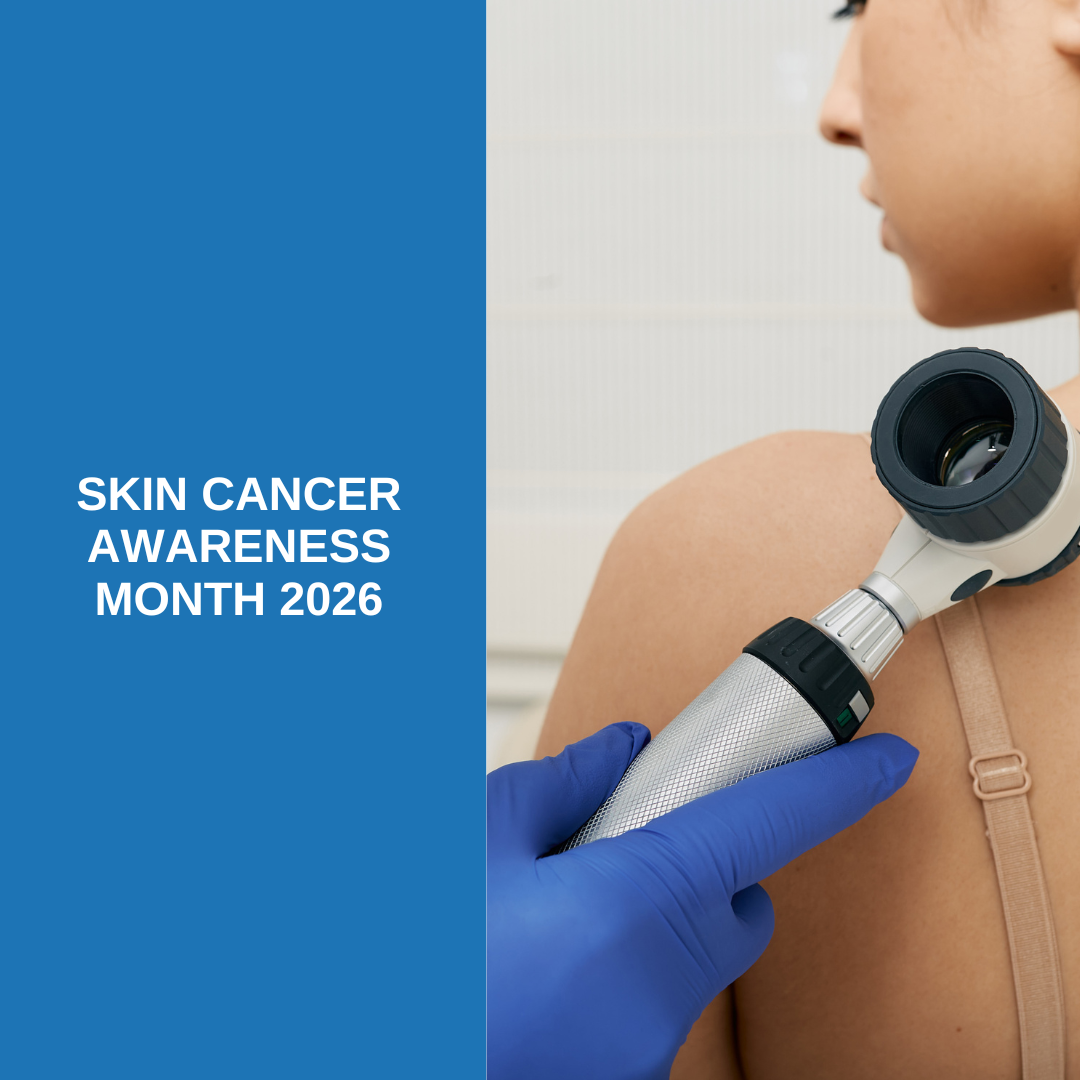
May is Skin Cancer Awareness Month, a time to spotlight the most common cancer in the United States! It’s estimated that one in five Americans will develop skin cancer in their lifetime. The good news? Skin cancer is also one of the most preventable cancers. Whether you’re thinking about sunscreen, worried about a changing mole, or just want to understand your risk, here’s a comprehensive look at skin cancer in 2026 and how to stay protected.
What Is Skin Cancer?
Skin cancer is the abnormal growth of skin cells, most often caused by exposure to ultraviolet (UV) radiation from the sun or indoor tanning devices. The three most common types include:
- Basal cell carcinoma (BCC): The most common, often appearing as a pearly or flesh-colored bump
- Squamous cell carcinoma (SCC): May look like a scaly patch or sore that doesn’t heal
- Melanoma: The most serious type, developing in pigment-producing cells (melanocytes)
The Scope of Skin Cancer in 2026
The numbers are striking and continue to rise. According to the American Academy of Dermatology:
- Skin cancer is the most common cancer in the U.S.
- 1 in 5 Americans will develop skin cancer in their lifetime
- About 9,500 people are diagnosed every day
- Over 1 million Americans are living with melanoma
Who Is Most at Risk?
Skin cancer affects everyone, regardless of skin tone. However, there is data to show rates of development vary:
- Lifetime melanoma risk:
- White individuals: 1 in 33
- Hispanic individuals: 1 in 200
- Black individuals: 1 in 1,000
These are taken from a March 2026 article from the American Academy of Dermatology linked here. It is worth noting that while skin cancer rate are lower in patients with darker skin, it is often diagnosed later, making it more dangerous.
It may also appear in less sun-exposed areas, such as:
- Palms of the hands
- Soles of the feet
- Under nails
- Inside the mouth
Major Risk Factors
Understanding your risk can help you take action. The below all increase your risk of developing skin caner:
- UV exposure (sunlight and tanning beds)
- History of sunburns, especially in childhood
- Indoor tanning (especially before age 30)
- Fair skin, light hair, or skin that burns easily
- Multiple or atypical moles
- Personal or family history of skin cancer
- Weakened immune system
Notably:
- Experiencing 5+ blistering sunburns between ages 15–20 increases melanoma risk by 80%
- Women under 30 are 6x more likely to develop melanoma if they use tanning beds
Skin cancer is incredibly common, but also highly preventable and treatable when caught early. Small daily habits like wearing sunscreen and checking your skin can make a life-saving difference.
This Skin Cancer Awareness Month, take a few minutes to prioritize your skin. It’s the only one you’ve got. Schedule your skin exam, protect your skin daily, and don’t ignore changes—early detection saves lives.
The information presented in this blog is for informational purposes only and should not be taken as medical advice. If you have questions or concerns, please call our office or make an appointment with a medical professional. Savannah River Dermatology is located at 575 Furys Ferry Rd in Augusta, Ga. Our office can be reached at 706-691-7079.