
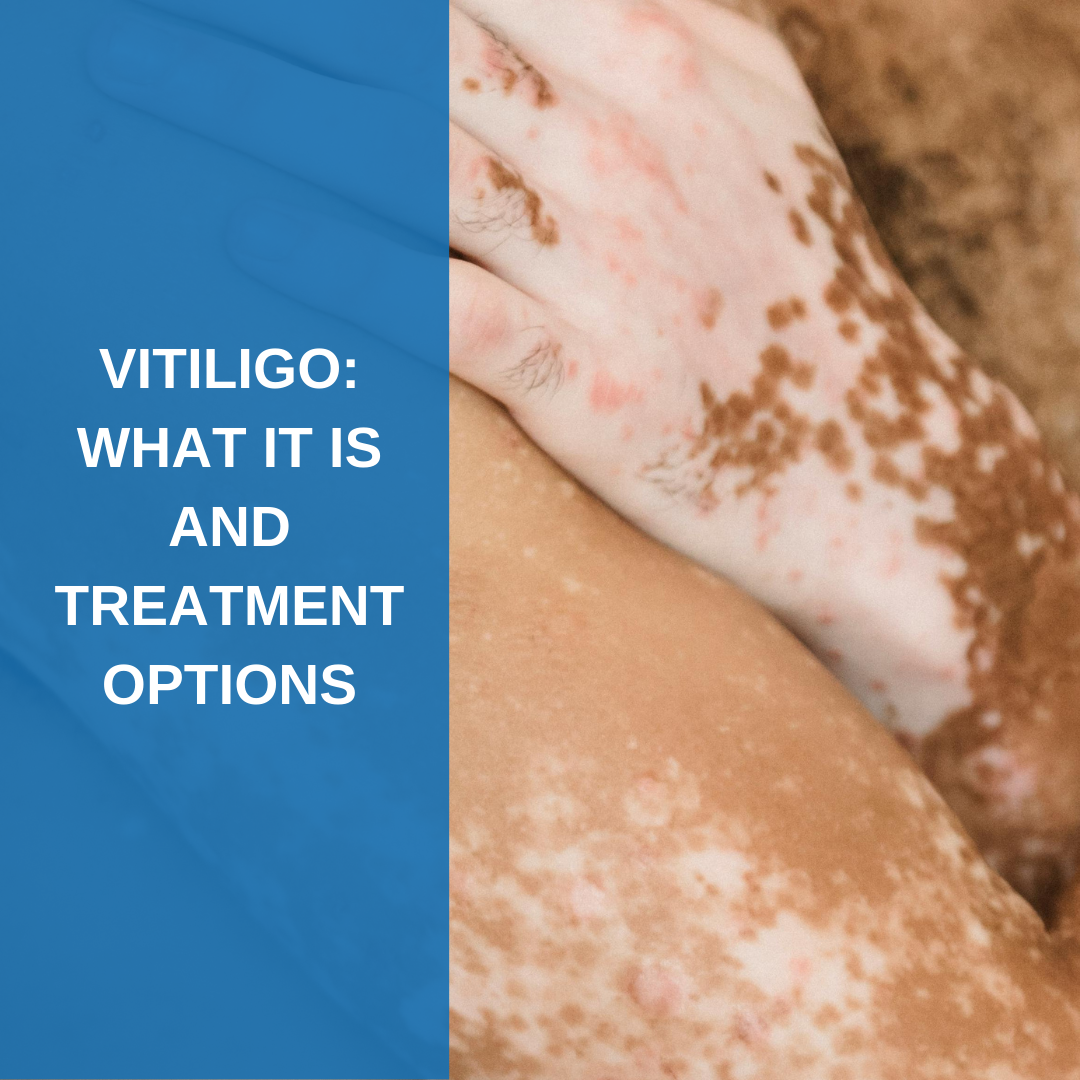
Vitiligo is a skin condition that causes areas of skin to lose color, resulting in lighter spots or patches. While it can look different from person to person, vitiligo is a medical condition not a cosmetic choice and it is not contagious.
Vitiligo can affect people of all skin tones. The contrast between natural skin color and lighter patches is often more noticeable in individuals with darker skin tones or a tan, which can make the condition feel especially visible.
How Does Vitiligo Begin?
Vitiligo often starts with a few small, light-colored patches on the skin. Over time, these patches may stay the same, grow larger, or new patches may appear elsewhere on the body. There is currently no way to predict how much color loss will occur, where new patches may form, or how quickly vitiligo may progress.
Dermatologists classify vitiligo based on how and where it appears on the body:
Types of Vitiligo
Localized Vitiligo: When color loss appears in one or just a few areas of the body, it is called localized vitiligo.
Generalized Vitiligo: This is the most common form. It causes scattered patches of color loss on different areas of the body, often appearing symmetrically, such as on both hands, knees, or elbows.
Non-Segmental Vitiligo: This type tends to spread slowly over time, with new patches developing intermittently throughout a person’s life.
Segmental Vitiligo: Also known as unilateral vitiligo, this type typically causes rapid color loss on one side or part of the body. After about 6 to 12 months, it usually stabilizes, meaning the color loss stops and new patches do not continue to appear.
Mixed Vitiligo: A rare form that includes features of both segmental vitiligo and more widespread color loss.
In rare cases, individuals may lose most of their skin pigment. This is known as universal vitiligo.
Is There a Cure for Vitiligo?
There is currently no cure for vitiligo. However, dermatologic treatments can help restore lost skin color, even out skin tone, and slow or stop the spread of the condition. Research shows that achieving a more even skin tone can significantly improve both physical comfort and emotional well-being.
No single treatment works for everyone, which is why personalized care from a board-certified dermatologist is essential.
Vitiligo Treatment Options
Treatment plans are customized to each individual and based on the type of vitiligo, how widespread it is, and how long it has been present. Treatment options may include therapies designed to help repigment the skin and reduce further color loss.
Starting treatment early is important. Vitiligo that has gone untreated for many years can be more difficult to manage, while early intervention often leads to better outcomes.
Can Vitiligo Be Prevented or Stopped?
There is currently no way to prevent vitiligo from developing. However, we can offer treatments that may slow or reduce its spread.
Sun protection is especially important for individuals with vitiligo. Skin affected by vitiligo lacks pigment, making it more vulnerable to sunburn. A severe sunburn can worsen vitiligo and trigger further color loss.
If living with vitiligo, we recommend:
- Seeking shade when possible
- Wearing sun-protective clothing
- Applying a broad-spectrum, water-resistant sunscreen with SPF 30 or higher to all exposed skin
Avoiding tanning and tanning beds
When to See a Dermatologist
If you notice light-colored spots or patches on your skin, it’s important to see a board-certified dermatologist. Many skin conditions can cause skin lightening, and an accurate diagnosis is key to proper treatment.
If you have vitiligo, early evaluation and treatment can make a meaningful difference in managing the condition and protecting your skin.
At Savannah River Dermatology, we are committed to providing compassionate, expert care for patients with vitiligo. We strive to help you understand your condition and explore treatment options tailored to your needs.
The information presented in this blog is for informational purposes only and should not be taken as medical advice. If you have questions or concerns, please call our office or make an appointment with a medical professional. Savannah River Dermatology is located at 575 Furys Ferry Rd in Augusta, Ga. Our office can be reached at 706-691-7079.