
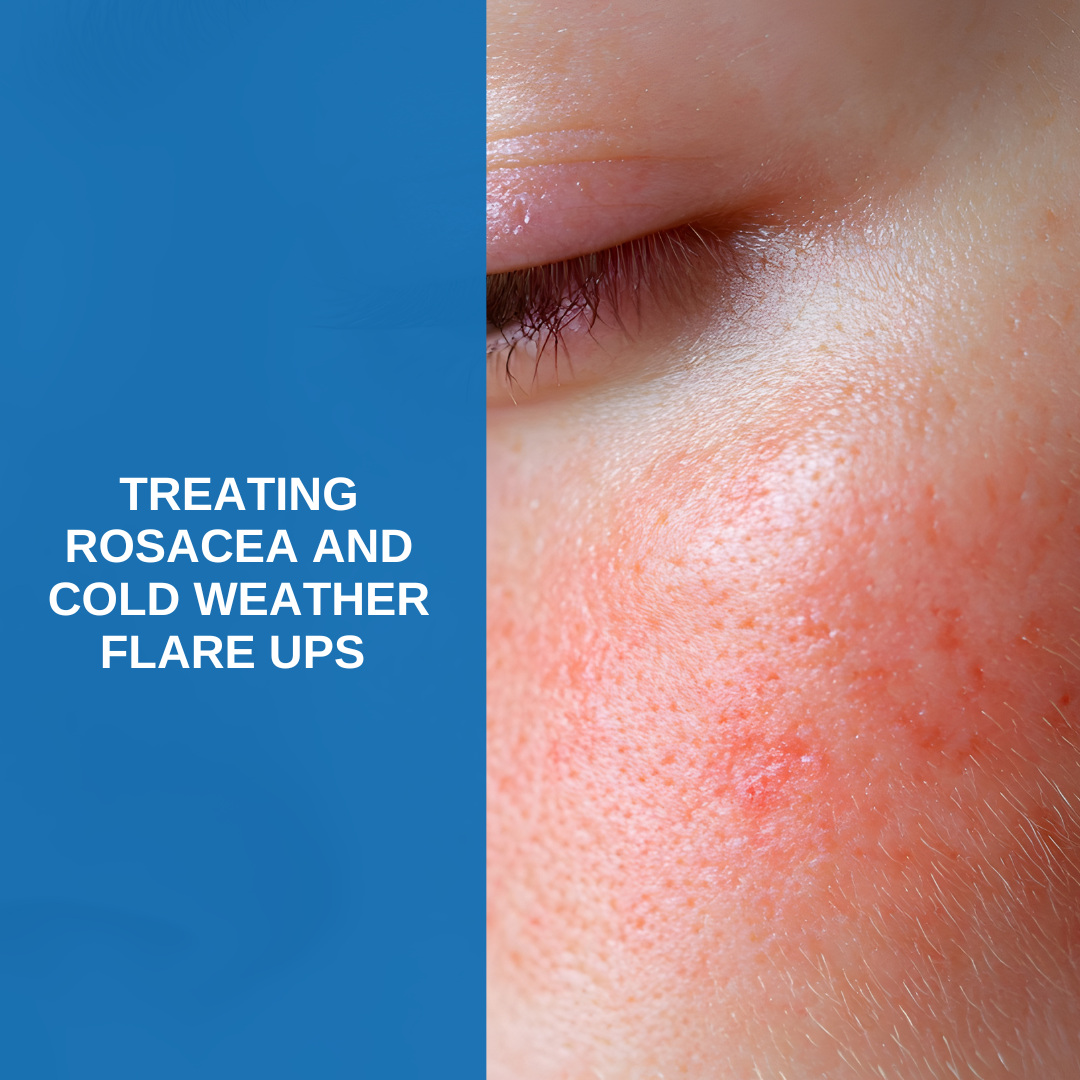
Winter can be a challenging season for people living with rosacea. Cold temperatures, harsh winds, and dry indoor air can all trigger redness, flushing, and bumps. An estimated 14 million Americans experience rosacea, and many notice their symptoms worsen during the winter months.
The good news? With the right precautions, you can help protect your skin and reduce flare-ups throughout the season.
1. Remember Sunscreen—Even in Winter
Sun exposure is the number-one trigger for rosacea, and winter is no exception. While the sun may feel less intense in colder months, UV rays can still irritate sensitive skin.
Choose a daily moisturizer with SPF 30 or higher, preferably containing zinc oxide or titanium dioxide, which tend to be less irritating for rosacea-prone skin.
2. Avoid Hot Drinks
Warm beverages are comforting in winter, but very hot drinks can trigger facial flushing and flare-ups.
3. Don’t Get Too Warm
After being out in the cold, it’s tempting to crank up the heat, sit close to the fire, or take a long hot shower. Unfortunately, excessive warmth can worsen rosacea.
4. Protect Your Face From the Wind
Cold winter wind is one of the most common rosacea triggers. It irritates blood vessels and can worsen redness. Covering your face helps shield sensitive skin from harsh conditions.
5. Moisturize Regularly
Dry skin is more prone to irritation and flare-ups. Choose a gentle, fragrance-free moisturizer with minimal ingredients. Moisturizing regularly helps protect the skin barrier and reduces winter-related dryness.
6. Humidify and Hydrate
Low humidity during winter dries out the skin even more. Using a humidifier can help restore moisture to the air, while staying hydrated supports skin health from within.
Try increasing your water intake by swapping one soda, coffee, or juice each day for a glass of water.
Winter can be tough on rosacea-prone skin, but proactive care can make a meaningful difference. By protecting your skin from sun, wind, heat, and dryness, you can reduce flare-ups and stay more comfortable all season long. If your rosacea symptoms worsen or don’t improve with at-home care, consider scheduling a visit with us to discuss personalized treatment options.
The information presented in this blog is for informational purposes only and should not be taken as medical advice. If you have questions or concerns, please call our office or make an appointment with a medical professional. Savannah River Dermatology is located at 575 Furys Ferry Rd in Augusta, Ga. Our office can be reached at 706-691-7079.